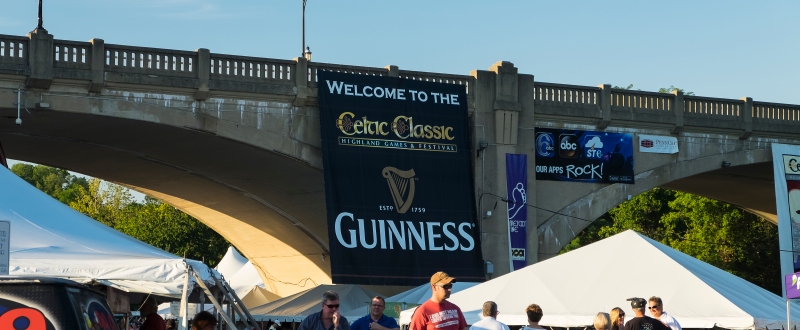
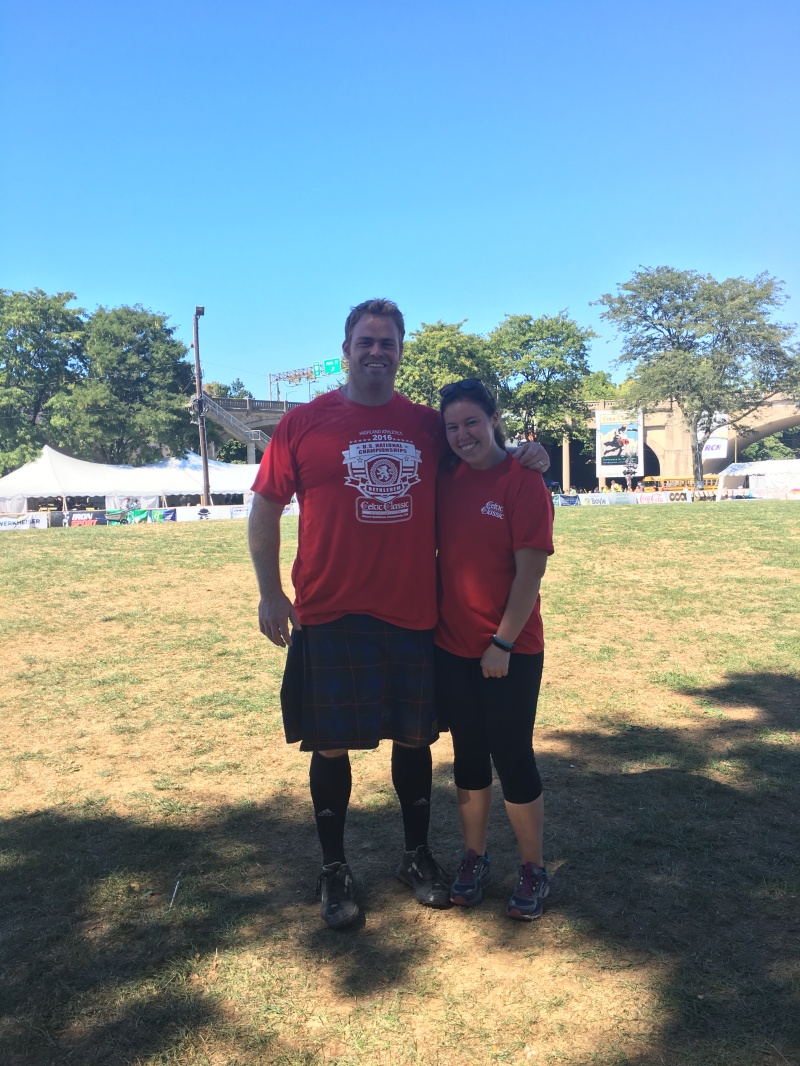
I am a college student. I attend Lehigh University, which is a regionally prestigious private school in the small city of Bethlehem, Pennsylvania. For a communications class I am currently taking, I was required to have an experience and create a blog post about it, the blog post I am currently writing. Attending the local Celtic Festival, a festival celebrating Celtic culture, was suggested in class as a potential experience, and I took this option. The Celtic Festival, officially titled the Celtic Classic Highland Games and Festival, is one of many festivals the city of Bethlehem puts on, the most famous of which is probably Musik Fest, a music festival that has recently featured acts as prominent as Jerry Seinfeld, a stand-up comedian best known for the television sitcom Seinfeld. I have attended many of these festivals before, including the Celtic Festival, as a child because I grew up a little under an hour away from Bethlehem in a small town where there was very little to do and many townspeople traveled far for events of smaller magnitude than the Celtic Festival. The Celtic Festival runs three days a year, in the fall, Friday through Sunday, and this year those dates happened to be September 25th through the 27th. I determined this by searching the internet for Bethlehem Celtic Festival, and looking at the website set up for the event and the schedule on that website. I chose Sunday to attend as it was the day I had the most time available. I attended the event with a person close to me who was visiting me for the weekend, a college student attending Kutztown University, a public school that is part of the Pennsylvania state system of schools. The event ended earlier on Sunday than the other days, at 8 p.m. instead of 11 p.m. It’s about a twenty minute walk from my dorm room to the festival, which is located officially at 532 Main street Bethlehem. Pa., 18018, and we left sometime around 5 p.m., so we had about two hours at the festival.
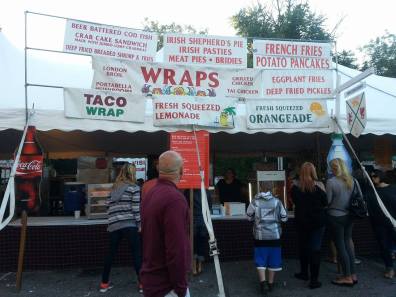
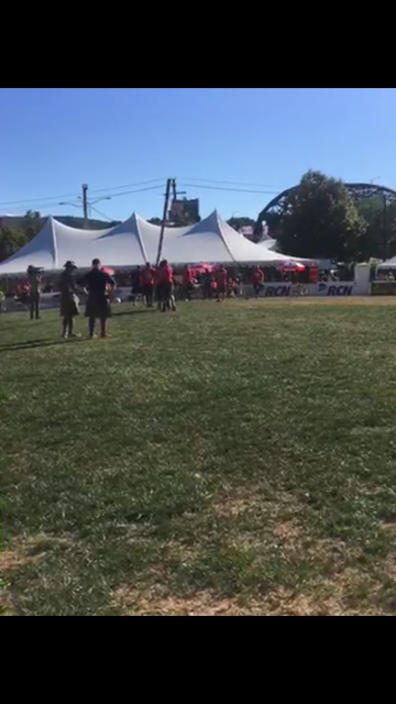
The event is denoted by its white tent stands. At the south end of the event, where we entered, these stands primarily sell food. Some of this food is classic Celtic food such as shepherd’s pie, which is ground beef topped with vegetables and mashed potatoes, and bridies, which are pockets of ground beef baked in a pie crust; some of the food is American festival fare, either mass-produced like mozzarella sticks or locally produced like a stand selling free-range fried chicken; and some of the food is a strange mishmash like the Celtic “walkaway sundae” featuring different Celtic foods stacked atop each other in a plastic cup. The last option seemed gross to me and I didn’t try it at any point in the evening. At this point we were not hungry anyway, and we did not feel like exchanging our cash for the event tickets required to purchase food, so we did not try anything at this end. On our left was an empty field, where teams at some earlier point threw long pieces of wood that look like telephone poles as far as they could, because this is a traditional Celtic sport called the caber toss. I didn’t feel a desire to watch this year’s competition, as I have seen it before, and it only took one viewing for the novelty to wear off and then it was no more exciting than watching my high school shot put team put a shot.
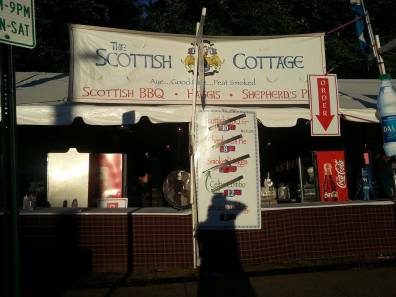
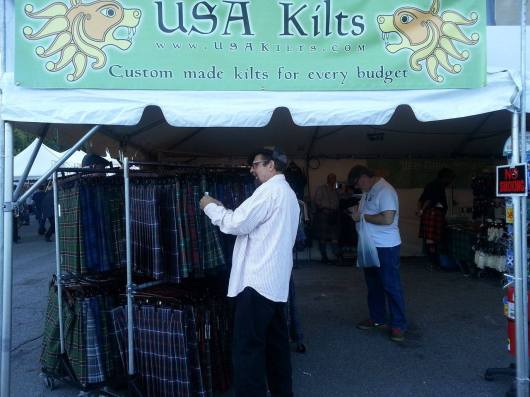
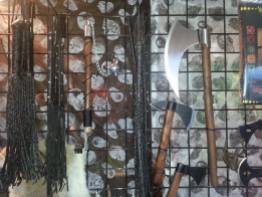
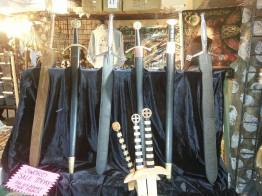
The middle section of stands is primarily vendors selling Celtic-related wares, such as jewelry, old fashioned caps, swords, and kilts. These were often priced beyond my wallet, and were not for the most part goods that had a high degree of potential daily use, as items such as kilts could really only be socially-acceptably worn by me at an event such as the Celtic festival, and really I had no desire to wear one anyway. I like my shorts and jeans. I was a little tempted by the very neat and real looking swords for sale, but I was sure they were hundreds of dollars without even asking. The amount of kilts and old fashioned caps being worn at the festival showed that these vendors were not having trouble selling!
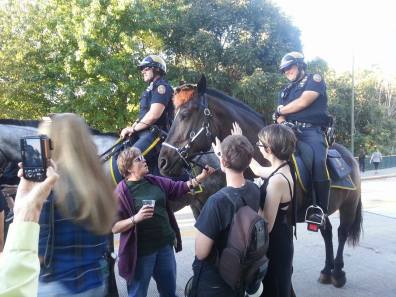
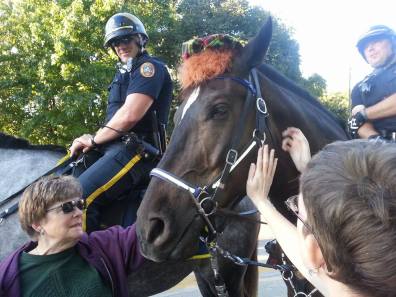
In this section two mounted policemen, meaning policemen riding horses, were stationed. The Bethlehem police force has a group of policemen who ride horses in areas of the city, perhaps out of tradition, perhaps because horses are threatening as they could rear up and kick you. These policemen, though, acted like a real buddy comedy team with lots of horse-based jokes as people petted their horses. When a woman’s plastic cup, which was filled with beer, was held by the woman close to one horse’s face purely by accident, one policeman said that she should move it away before the horse took a drink. The other policeman then said that that sort of thing has happened before, though he was likely kidding. The first policeman then asked the woman what kind of beer she had. She responded with a particular type of beer, such as a lager, though I don’t remember exactly what type. The first policeman responded that the horse was more of an IPA guy. I found this sincerely funny, and felt like I was in the middle of a hit Kevin James comedy.
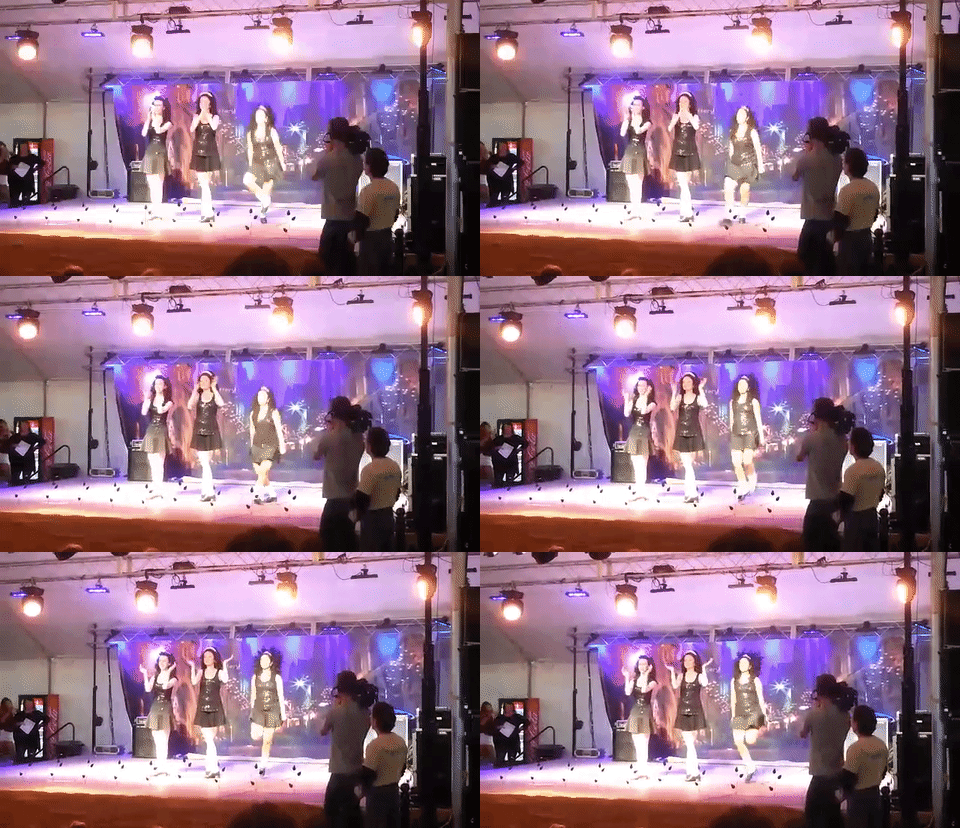
Finally, we arrived at the northern end of the festival, where a major event tent is located. This event tent currently featured Irish river dancers, who are dancers that for the most part only use their legs to dance, not the rest of their bodies, in a kind of rhythmic hopping with some fancy footwork in typically one spot that can produce a loud stomping noise. It’s a real treat to watch for many people, given that the near-capacity crowd in the tent was clapping along. I myself have always found this type of dancing a little boring, because it only involves the legs, and it seems like there’s only so much you can really do with it. It does seem fun for the dancers though, and they did a great job!
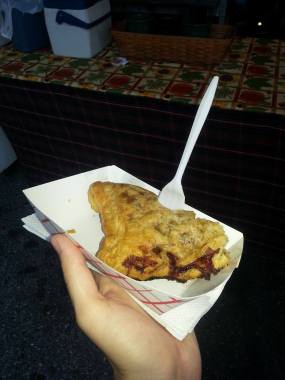
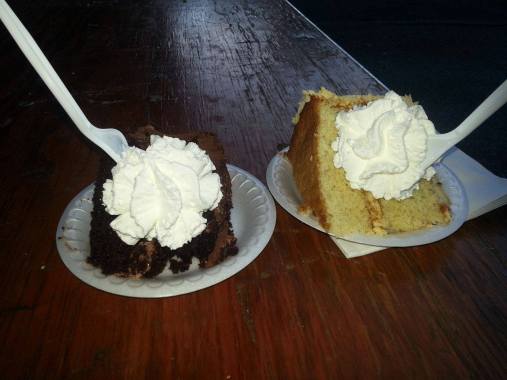
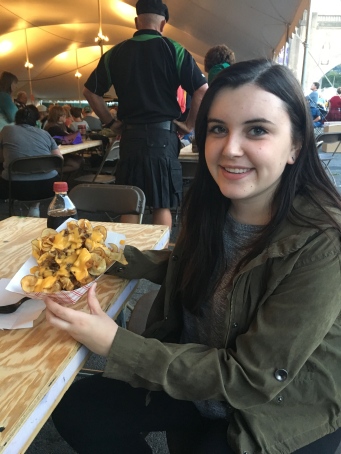
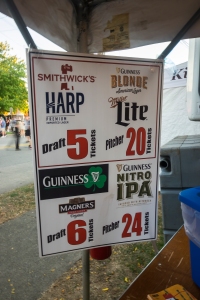
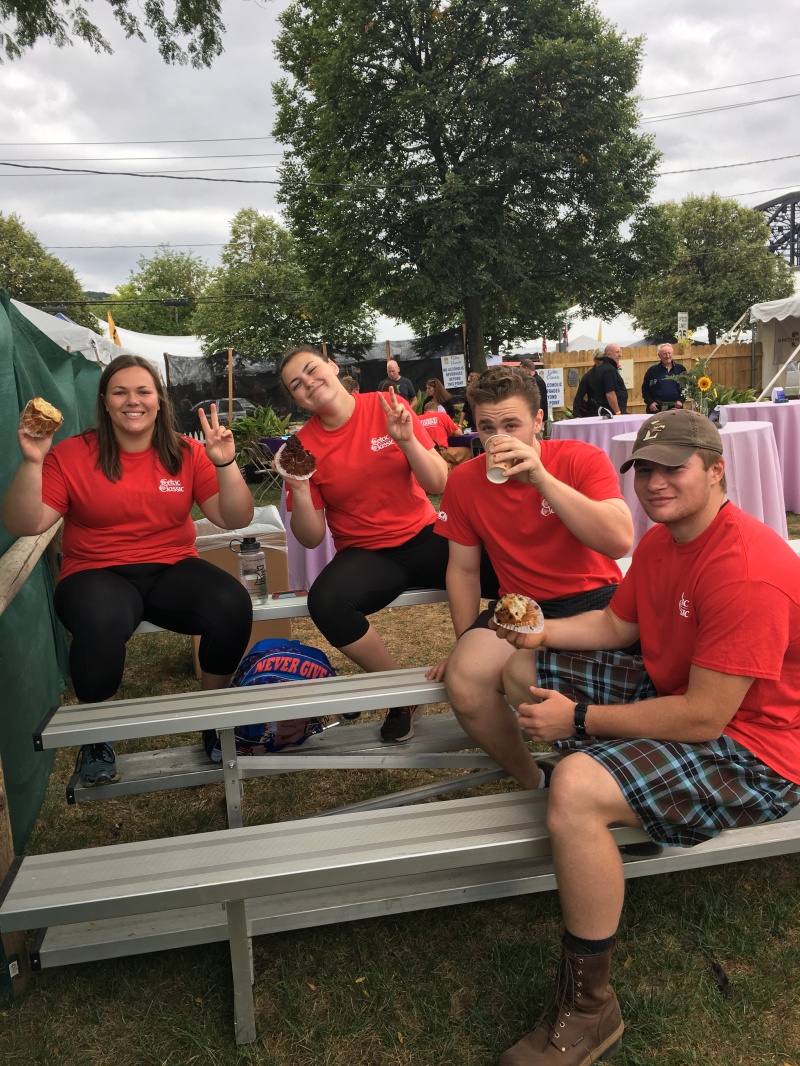
Opposite this tent were more food stands. We purchased twenty five dollars in tickets at the ticket stand using a Visa credit card, as my partner was now hungry, and purchased one lemonade and one bridie, otherwise known as a meat pie. This cost eleven dollars in tickets. She tried the bridie, and said that it was a little boring in flavor, as it was just ground beef and a crust. She added barbecue sauce to it, and this improved its flavor. Before we left, we purchased two slices of cake from a bakery vendor, one chocolate, and the other Bailey’s Irish crème liqueur flavored, both of which we shared, each eating half. This cost fourteen dollars, the last of our tickets: perfect! The chocolate cake was a solid chocolate cake, about what you’d expect. The Bailey’s Irish crème cake was stale, and did not have much flavor. I take responsibility for the lack of flavor, however, as that is more of a judgment call on my part. Bailey’s is most often used as a smoothing agent in shots consumed primarily by college-age drinkers, rather than a flavorful liqueur meant to stand on its own, and therefore a cake flavored solely with that liqueur should not be expected to be particularly flavorful.
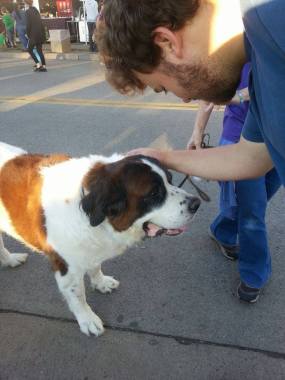
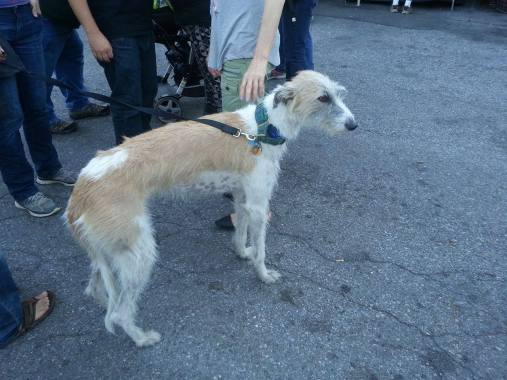
I have to note that the dogs at this festival were many and great, and the people attending the festival were more than happy to allow you to pet their dogs for the most part if you asked. I petted a Saint Bernard that was one of the largest dogs I have ever come across. Its head felt as big as a basketball, and it reminded me that dogs evolved from wild animals, which were most likely wolves.
After all this excitement, it was good to take a walk on the Bethlehem canal trail, which is a path along the old, now-unused transportation canal that runs through Bethlehem. This is a packed gravel and dirt path that starts right at the edge of the festival. The path runs under several bridges, some still in use and some not, and one that is graffitied with mysterious messages that I could not understand. As we moved farther along the path, however, we were enclosed by trees on the far side of the canal on our right and the near side of the path on our left, and beyond the trees on our left a river flowed. We felt like we were no longer in the city, but truly deep in nature. My partner told me of a time she hiked up a mountain, that as she walked across the top of the mountain a hole opened up in front of her that had been hidden among the boulders she was walking on, like a cave but angled straight down with no bottom visible, and she could have fallen down it because there were no warning signs at all. Thankfully, she didn’t. As we talked, many birds chirped and the insects made that weird whirring sound they make that you’ve probably heard before.
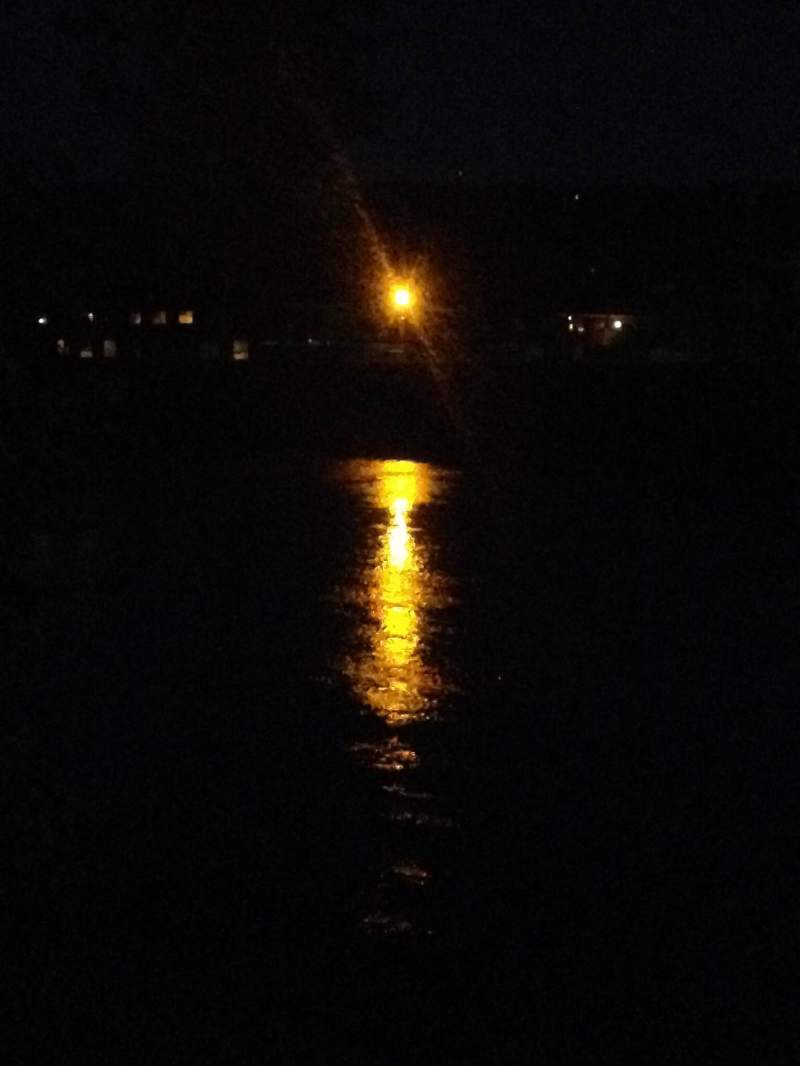
On our way back night had fallen, and a light across the river shined on the water. The night was so dark that it seemed that the light and its reflection existed on a single, separate plane from the rest of the world, and that the light and its reflection were equal, not a source and its expression but two independent entities working together even while apart, the reflection a beam leading up to the point of light and not quite reaching it. I felt that this was a good representation of my emotional state at the time, like I was moving through the form of a potential realization but not actually reaching it. I also thought that this wasn’t true, that I wanted to feel melancholic because my surroundings were melancholic, but really the situation was trivial, and nothing important was happening in my mind.
When we returned to my dorm room we agreed it had been a good day. We had moved through two environments fairly different from what we experience on a daily basis and highly different from each other, one commercial and one natural, one hectic and one peaceful, one cluttered and one composed of organic variations on a set of often highly linear forms: the canal, the river, the path, the trees lining the path. The two contrasted with each other in our memory, refreshing us for each experience as we re-experienced them in our heads. That’s probably not true, but the environment of the path did at the time give us mental space to reflect on and process the objects presented by the festival, allowing the experience to come to a more reflective, and therefore fulfilling, ending. In any case, these objective environments did break us out of the routine intersubjective streams that we had been occupying as students — textbooks, scheduled lectures, social media — and gave us a break from subordinating our minds to others’ often dispassionate and, in the case of social media, highly fractured thoughts, in an almost continuous state of being only partially ourselves. So even if it’s something as simple as a little festival, having an experience can make you feel more alive. The city of Bethlehem presents many festivals over the course of the year, including the aforementioned Musik Fest and the highly popular Christmas celebration featuring Christkindlmarkt, a gathering of Christmas-themed vendors. Check one out today at their event page!
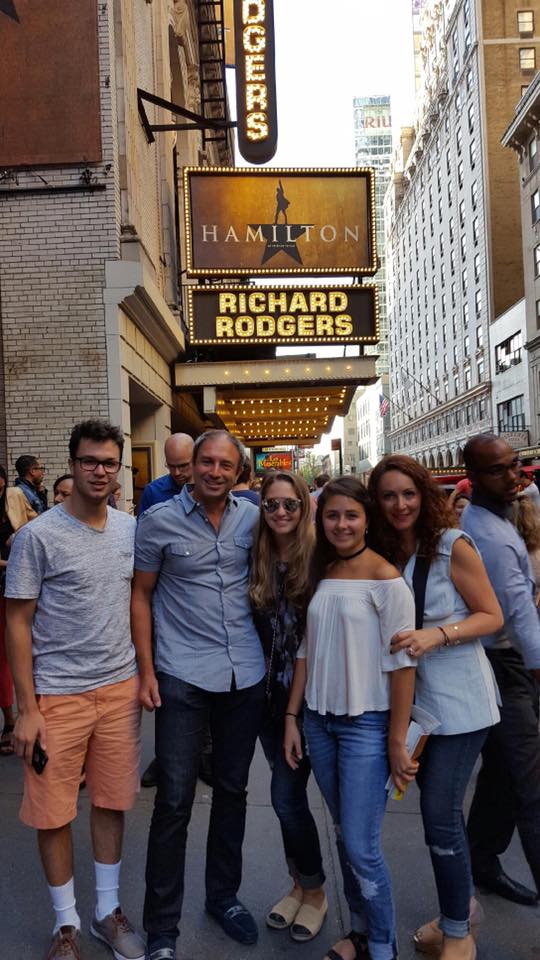
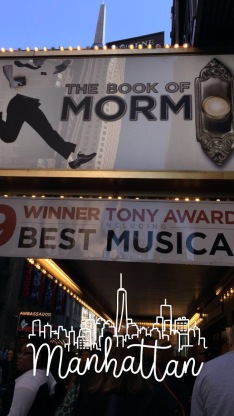 The play started at 2:00pm, so after our slow morning and lovely breakfast of real New York bagels, we headed over to Broadway at around 1:00pm. The last time I had been on Broadway was for our 8th grade New York/DC field trip and we saw Billy Elliot. I can’t say I remember much about the content of the play, but I do remember thinking the theatre was incredible. The particular theatre that was showing The Book of Mormon was the Eugene O’Neill theatre and it was just as incredible as I had remembered. After waiting for about 10 minutes in line outside, we finally were ushered in, handed a playbill and directed to our seats which were literally the last row you could possibly sit in, but I wasn’t complaining. I was really surprised at how packed in we all were. Every time
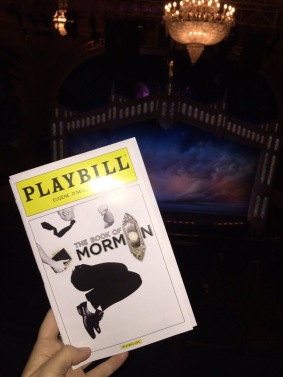 utely hysterical. During some parts I actually questioned how everyone in the room was ok with what they were seeing but then I remembered it won nine Tony awards and people must not be too offended by it. There was one actress in it, her character’s was named Nabulungi, and I swear she had the most beautiful voice I had ever heard. Every time she had a singing part I got the chills and whole crowd roared in applause at the end when it was her turn to bow. Of course I bought the soundtrack right after. It’s funny because I’ve never been super into plays or musicals and this experience was completely eye opening. I definitely appreciate good music and entertainment but I have never truly appreciated Broadway and the talent that performs there. I will forever be in awe of those performers who dedicate their time to making others laugh, or cry, or feel anything, and it really hit me in that moment watching and listening to her sing.
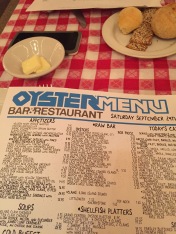 After the play, my mom and both walked out nodding in agreement that it was amazing and funny and vulgar and everything we had hoped it would be. We strolled in to Grand Central station to eat dinner at the Oyster House and discussed the play all the way until we got home that night. The next morning, I had to wake up and get back on the bus to go back to Bethlehem. I said my goodbyes to my mom and thanked her for being so cool and taking me to plays and hanging out with me. I can truly say it was an experience of a lifetime and I encourage everyone, interested in plays or not, to go to Broadway, watch a play, and experience the magic. And if you like comedy, and you’re not easily offended, please go see this one. I’m still laughing.
 arts@Lehigh Blog
You must be logged in to post a comment.